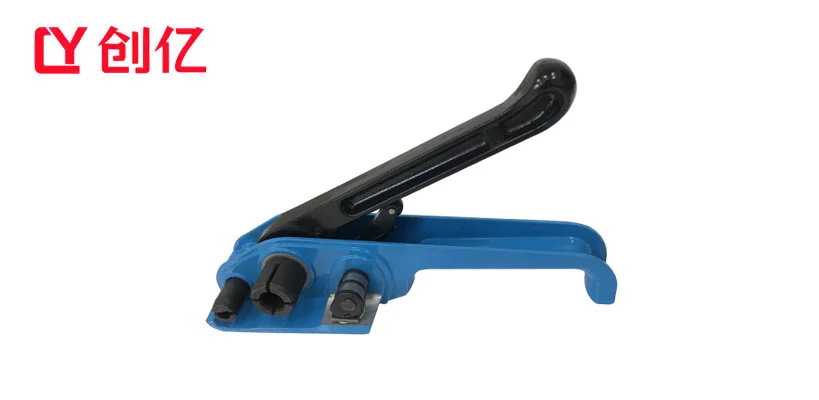
A strapping tensioner is a small part of a larger packaging process. The right tool must fit the strap material, strap width, package shape and the way the operator works. A tool that looks suitable in a catalogue can still be uncomfortable, incompatible or difficult to use on the actual load.
The best starting point is the packaging task. Describe the goods, the strap, the seal or buckle method and the working space before choosing a tool.
What does a strapping tensioner do?
A strapping tensioner helps an operator tighten a strap around a load. Depending on the tool and workflow, the strap may then be sealed with a buckle, a sealer or another connection method. The tensioner is one step in the sequence. It does not replace the need to choose the correct strap or the correct joining method.
The operator should be able to position the tool, pull the strap into the required direction and complete the tensioning movement without damaging the goods. Package corners, uneven surfaces and limited access can all change the tool choice.
Start with the strap material
The tool should be evaluated with the strap material being used. PP strapping, PET strapping and other strap types can have different handling characteristics. A tool that works well in one workflow may not suit another width, material or joining method.
Before asking for a quotation, record the current strap material and width. If the material is not known, include a photo of the strap and its packaging label. This gives the supplier a practical starting point.
For material selection, review the PP strapping page and PET strapping page. If the tool will be used for a wider band, mention the target width in the inquiry so compatibility can be discussed.
Manual, pneumatic or machine-assisted work
Manual strapping tools are often considered for flexible packing areas, mixed loads and lower-volume work. They can be moved from one package to another without a fixed machine station. The operator still needs enough room to position the strap and complete the tensioning step safely.
Pneumatic tools use compressed air to support the tensioning, joining or cutting process. They need a suitable air supply and a workflow that can accommodate the tool. Include the available equipment and the work environment before selecting this route.
Automatic or semi-automatic packing lines require a different conversation. In that case, the strap, machine and line settings should be reviewed together. A hand tool is not a substitute for a machine integration plan.
Five questions to ask before choosing a tool
- Which strap material and width are being used?
- Is the work manual, pneumatic, semi-automatic or automatic?
- What shape and size are the packages?
- How much space is available around the load?
- How is the strap joined after tensioning?
These questions help separate a general product search from a useful tool specification. They also make it easier to compare a manual tensioner with a pneumatic baler or another packaging tool.
The package shape matters
A tool needs access to the strap. Tall cartons, narrow gaps and uneven pallet loads can make a particular handle or body shape harder to use. If the strap sits close to the package edge, the operator may need to protect the product before applying tension.
Paper edge protectors can be part of the same packaging setup. They help protect product edges and stabilize goods secured on a pallet. See the paper edge protectors page when the strap contacts exposed corners.
The tool should also be comfortable for repeated use. Handle position, weight, working direction and operator reach affect the actual packing result. A short test on a representative load is more useful than choosing from a product photo alone.
What should a sample or trial check?
During a trial, observe the complete sequence rather than only the tensioning movement. Check whether the operator can position the strap, tension it, complete the join and remove the tool without disturbing the load.
Ask whether the tool slips, whether the strap is damaged, whether the operator needs to reach across the package and whether the final load remains stable after handling. Record the strap and package details used in the trial so a later comparison is meaningful.
If several operators use the same station, collect feedback from more than one person. A tool that feels fine for one operator may be awkward for another because of reach or working angle.
Common buying mistakes
The first mistake is selecting a tool by the word “heavy duty” without checking compatibility. The second is ignoring the joining method. Tensioning and sealing are connected steps, and the tool choice should fit both.
The third mistake is choosing a tool for an ideal package instead of the actual load. The fourth is forgetting the air supply when reviewing pneumatic equipment. The fifth is treating a tool as a stand-alone purchase when the process also needs suitable strap, buckles, seals or edge protection.
For related accessories, review the products page and include the complete packaging sequence in your inquiry. This makes it easier to discuss a matched combination instead of one isolated component.
What to include in a quote request
Send the following information when possible.
- Strap material and width
- Package or pallet dimensions
- Product weight or load description
- Manual, pneumatic or machine-assisted workflow
- Joining method, such as buckle or seal
- Available air supply, if relevant
- A photo of the current packing station
- The problem the team wants to solve
If a model has already been selected, include the model name. If not, describe the task and ask for a suitable option. A supplier can review the request without guessing the application.
A practical decision path
Start with the load. Confirm the strap. Describe the joining method. Then choose the tool style that fits the working environment. If the team handles mixed goods, favor a clear and flexible trial process. If the line is fixed and repeatable, discuss equipment compatibility before placing an order.
Weide Packaging supplies strapping tools alongside PP strapping, PET strapping, stretch film and paper edge protectors. Use the Request a Quote page to share the package, strap and workflow details.
Check the joining method during the trial
Ask the supplier to identify the matching seal or buckle and explain the intended sequence for the proposed tool. Record those component references together. A quote for a tensioner alone leaves the buyer with an incomplete picture if the existing joining components are incompatible.
For example, imagine a station using several strap widths. The operator needs an easy way to tell which combination belongs to each task. Keep the strap label, tool reference and joining component in the packing instructions. Confirm maintenance and replacement-part information with the tool supplier before ordering, especially when production depends on a single tool.